


Financial Planner Camberwell for Retirement Success
Planning for retirement is about more than simply saving money. It involves understanding your current financial position, setting realistic retirement goals and creating a strategy for your superannuation, investments, income, tax considerations and financial protection.
If you are searching for a Financial Planner Camberwell residents can work with for retirement planning, the right adviser should look at your complete financial picture rather than focusing on a single investment or financial product.
A well-structured retirement strategy can help you understand where you are today, what you may need in retirement and what steps could help you work towards your long-term goals.

Retirement success starts with a plan that connects your money with the lifestyle you want to live.
Why Retirement Planning Matters in Camberwell
People approach retirement with different financial circumstances.
Some may have accumulated superannuation and investments over many years. Others may still be paying off a mortgage, supporting children or building their investment portfolio.
This is why retirement planning should be personalised.
Common Retirement Planning Goals
Your retirement goals might include:
Maintaining your current lifestyle
Travelling more
Paying off your mortgage
Supporting children or family members
Building investment income
Maximising appropriate superannuation opportunities
Reducing financial uncertainty
Leaving assets for the next generation
Transitioning gradually from work to retirement
The first step is to understand what retirement means to you.

Financial Planner Camberwell: How to Prepare for Retirement
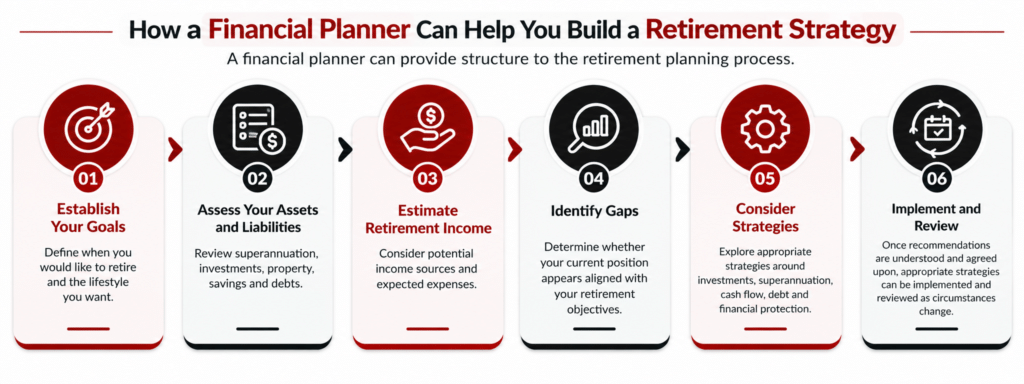
A retirement plan generally begins by assessing your current position.
1. Review Your Current Financial Position
Start by looking at:
Income
Household expenses
Savings
Superannuation
Investments
Property
Loans and other debts
Insurance
Existing retirement plans
This creates a starting point for identifying potential gaps and opportunities.
2. Define Your Retirement Lifestyle
Ask yourself:
What do I want my retirement to look like?
You may want to travel, spend more time with family, pursue hobbies or simply maintain a comfortable lifestyle.
Your desired lifestyle influences the amount of income you may need.
3. Estimate Future Retirement Income Needs
A retirement plan should consider both expected income and expected expenses.
Potential income sources may include:
Superannuation
Investment income
Pension or other government benefits where eligible
Property income
Other personal assets
The mix will depend on your individual circumstances.
4. Review Your Superannuation
Superannuation can form a significant part of retirement planning.
Consider reviewing:
Current super balance
Investment options
Fees and costs
Contributions
Insurance held through super
Retirement timeframe
How super fits into your overall strategy
5. Consider Your Investment Strategy
Investments may need to change as you move closer to retirement.
However, moving entirely into lower-risk assets is not automatically appropriate for everyone. Your investment timeframe, objectives, financial position and ability to tolerate investment losses all need to be considered.
6. Create a Retirement Income Strategy
Accumulating wealth is only one part of retirement planning.
You also need to consider how assets may eventually be converted into income to support your lifestyle.
Retirement Planning Services a Financial Planner Can Provide
A financial planner may help coordinate several parts of your retirement strategy.
Superannuation Planning
Your superannuation strategy can be reviewed as part of your broader retirement plan.
This may involve considering contributions, investment choices, fees and how your super could support your retirement income needs.
Investment and Wealth Management
Investments can play an important role before and during retirement.
A financial planner may assess:
Asset allocation
Diversification
Investment timeframe
Risk tolerance
Income requirements
Liquidity
Existing investments
Retirement Income Planning
Retirement income planning focuses on how your assets and other income sources may support your lifestyle once employment income reduces or stops.
Insurance Planning
Insurance can help protect your financial position during your working years.
Depending on your circumstances, this may include consideration of:
Life insurance
Income protection
Total and permanent disability insurance
Trauma insurance
Debt Management
Entering retirement with significant debt can affect cash flow.
A retirement plan can therefore consider how mortgage and other debts fit into your broader strategy.

When Should You Start Retirement Planning?
There is no universal age at which everyone should begin.
However, earlier planning can give you more time to understand your financial position and make changes where appropriate.
In Your 30s
You may be focused on:
Building superannuation
Paying down debt
Building investments
Protecting income
Establishing good financial habits
In Your 40s
Your priorities may include:
Increasing long-term wealth
Reviewing superannuation
Managing family expenses
Building investment assets
Reviewing insurance
Establishing clearer retirement goals
In Your 50s
Retirement planning may become more detailed.
You may want to assess:
Expected retirement age
Superannuation balance
Investment strategy
Mortgage position
Retirement income needs
Lifestyle expectations
In Your 60s
The focus may increasingly shift towards:
Retirement income
Asset management
Superannuation strategy
Cash flow
Government benefits where applicable
Estate planning coordination
The appropriate strategy depends on your circumstances.
How a Financial Planner Can Help You Build a Retirement Strategy
Why Choose Future Needs for Retirement Planning?
If you are searching for a Financial Planner Camberwell residents can consider for retirement planning, Future Needs provides financial planning services covering areas such as retirement planning, investment advice, superannuation, insurance and broader financial strategy.
Personalised Financial Strategies
Your retirement objectives, financial position and priorities are unique. A personalised approach can help ensure the planning process starts with your circumstances.
Comprehensive Planning
Retirement decisions can involve multiple areas of your finances. Looking at superannuation, investments, cash flow, debt and protection together can provide a broader view.
Long-Term Focus
Retirement planning is a long-term process. Regular reviews can help identify when your strategy may need to be reconsidered following changes in your circumstances.
Goal-Based Planning
Rather than starting with a financial product, the process should begin with your goals.
Your desired retirement lifestyle can then guide the financial planning discussion.

FREQUENTLY ASKED QUESTIONS
A financial planner helps clients understand their financial position, establish goals and consider strategies across areas such as retirement, investments, superannuation, insurance and cash flow.
Yes. Retirement planning can involve reviewing your assets, superannuation, investments, expected expenses and potential retirement income.
You can seek financial planning at any stage of your working life. Starting earlier can provide more time to understand your position and consider potential changes.
There is no single amount suitable for everyone. Your retirement needs depend on your desired lifestyle, expenses, housing situation, assets, income sources and other circumstances.
A financial adviser may provide advice about superannuation, including investment options, contributions and how super fits within your broader retirement strategy.
The value of financial advice depends on your circumstances, needs and the complexity of your financial decisions. Consider the potential benefits alongside the fees and costs.
Fees vary according to the adviser, service and complexity of the advice. Ask for a clear explanation of initial and ongoing fees before proceeding.
The terms are often used interchangeably in Australia. What matters is the specific services offered, qualifications, authorisations and scope of advice provided.
There is no universal schedule. A review can be appropriate when your financial circumstances, goals, income, investments or retirement timeframe changes.
Compare qualifications, authorisations, services, fees, communication style, retirement-planning experience and the level of ongoing support provided.